



Reflections from the therapy room - talking about feelings

Why it's hard to talk about feelings (even in therapy)

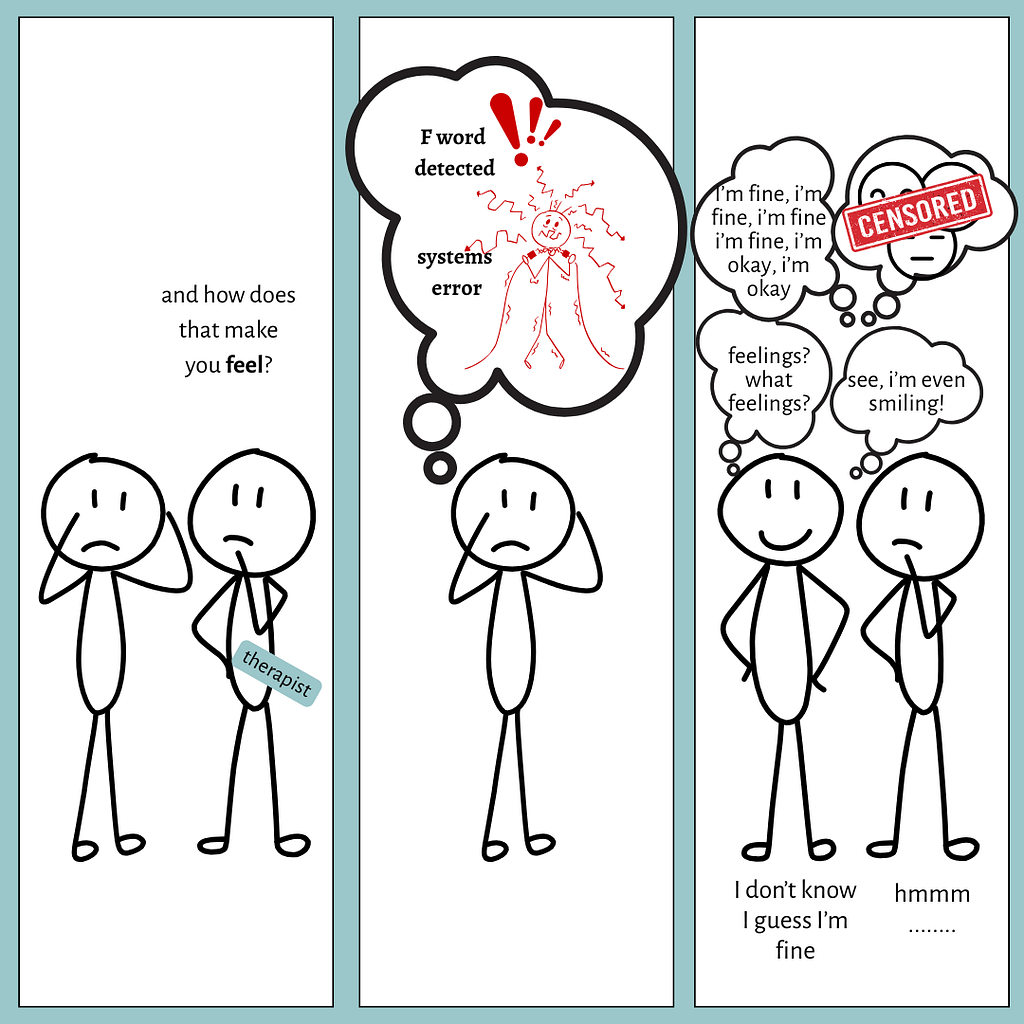
As a therapist, I often witness a familiar moment when I ask my client, “And how does that make you feel?” — a heavy pause descends and silence stretches.

Therapy is meant to be a safe space to talk about feelings — and to feel them. Yet many people struggle to open up.

Once upon a time, I worried about these pauses — that I had asked the wrong question, that the client was unwilling to engage, that there was no progress. Now, I see them differently. The truth is, struggling to put feelings into words is incredibly common.

When someone finds it hard to talk about or even connect with their feelings, it’s rarely because they don’t care, or because they’re holding back on purpose. More often, it’s because a part of their heart and mind is trying to protect them.

The Wisdom in Avoidance

Avoidance is not resistance. It’s usually protection — a part of the self that once learned: “Speaking your feelings is not safe.”

Sometimes, this comes from childhood environments where emotions were minimized: “Stop crying, there’s nothing to be upset about.”

Sometimes it comes from trauma, where vulnerability once led to pain.

Sometimes, it’s simply habit — years of pushing feelings down to keep life moving forward.

When those old lessons live in the body, silence becomes an act of self-protection.

These inner voices can silence emotions before they ever reach words.

Why people shy away from talking about their emotions

  • Beliefs about emotions itself: People may believe their emotions make them weak, or that emotions are useless or even dangerous.
  • Fear of vulnerability: Opening up means letting someone see the raw, unpolished parts of you. That can feel risky, even with a supportive therapist. When feelings feel too threatening, the mind can get creative at avoiding them.
  • Unwillingness to burden others: In many cultures, emotional restraint and self-sufficiency are valued.
  • Fear of being consumed by emotion: The worry of losing control and breaking down.
  • Lack of emotional awareness: Many weren’t taught an emotional vocabulary growing up, or may genuinely not know what they’re feeling. Some even develop what psychologists call alexithymia — difficulty identifying or describing feelings — because emotions were never given a language in their environment.
  • Fear of criticism (from self or others): people judge their own feelings as simply “wrong”, “too much,” “too silly,” or “not valid”, leading to minimisation or silence. Some clients worry their therapist will secretly think, “Your problems aren’t that serious.”

These concerns don’t disappear inside the therapy room— they often sit silently. Feelings of shame or guilt or deeply rooted beliefs about emotions themselves can be powerful barriers.

A client working through past trauma confessed something many people feel: “I’m scared that if I start crying, I won’t stop.”

One young professional struggling with stress and burnout once told me, “I just don’t have the words. Nothing comes up when you ask.”

Another client seeking help for self-esteem issues whispers “I don’t know” each time the question was posed.

More often than not, I hear “I feel okay” or “I feel fine”

illustration showing a person having difficulty talking about his feelings in therapy

If this sounds familiar, know that many people find themselves going blank when touching difficult thoughts or feelings—your mind is just trying to protect you.

If you’ve ever found yourself tongue-tied, mind going blank or hesitant in therapy, and worried that you’re “doing it wrong,” because therapy is supposed to be the place to talk about feelings

I want to reassure you: you are not failing. You are protecting yourself the best way you know how.

“People often avoid talking about their feelings — even in therapy, even when they know it’s expected — because discussing emotions can feel threatening, overwhelming, or shameful.

The experience of vulnerability, fear of judgment or rejection, and deep-seated habits of emotional avoidance all contribute to this hesitation.

Talking about difficult emotions requires a level of openness that can feel risky, even with a therapist. Individuals might worry about losing control, being misunderstood, or being judged for their thoughts and feelings.

Many have learned from past experiences — through family upbringing, culture, or trauma — that showing emotions is unsafe or unwelcome. In these cases, self-protection becomes a reflex.”

Why Talking About Feelings Matters

While avoidance may protect us in the short term, persistent avoidance of not discussing or acknowledging emotions, especially combined with internal inhibition, can lead to negative consequences associated with emotional suppression. Long-term emotional suppression has been linked to increased psychological stress — often showing up as anxiety, depression, emotional numbness, or difficulty connecting with others.

When we speak our feelings — even clumsily — we begin to integrate them, rather than carry them as unspoken weight.

Expressing emotions also strengthens relationships: openness fosters intimacy and trust, while bottled-up feelings create distance. It even benefits physical health — chronic emotional suppression is associated with higher blood pressure and reduced immunity.

Neuroscience research has shows that putting emotions into words, simply naming an emotion reduces its intensity, soothes the nervous system and helps us process experiences

The Gentle work of Therapy: Find your path and Go at your own pace

In therapy, the work is often not to “force” feelings out, but to gently normalize, build trust, and create safety so you can approach them at your own pace.

The struggle to talk about feelings is actually part of the healing journey itself. Over time, clients learn that feelings can be spoken, felt, and survived—without catastrophe.

Words are not always the first or easiest way to express emotion.

For the client who said, “I just don’t have the words,” I suggested writing things down during and between sessions. He later shared with some surprise, “I couldn’t say it out loud, but I could write it down.” That became his pathway. Gradually, the writing helped him discover the language he needed.

Gentle Reminders

  • You’re in control of how much we talk about right now. It’s okay to slow down or take breaks.

  • Feeling overwhelmed is a common response. You’re not doing it wrong.

  • Reframe “struggling to talk about feelings” as part of your healing, not a failure.

  • Therapy is about building safety and trust — one step at a time.

Share:

Category

speak to a counsellor

Contact us if you would like to make a counselling appointment or learn more about us and our team

Book AppointmentLearn more about us

Counselling Services FAQ

Counselling is a very broad term used in conjunction with many types of advice giving. In the context of psychotherapy however, counsellors rarely offer advice, it is the active process of assisting and guiding clients, by a trained professional to understand and resolve personal, social, or psychological problems and difficulties.

Psychotherapy, also called “talk therapy”  aims at gaining insight into mental or emotional health, the resolution of inner conflicts, and to enhance your relationship with yourself and others


The initial session is when your counsellor has the opportunity to find out what brings you to therapy and gather as much useful information as possible.

The counsellor then discusses with the client the various approaches which may be appropriate.

This is also a good opportunity to raise any questions and concerns about the counsellor or process of therapy itself.

It is also nornal to feel anxious or somewhat apprehensive about speaking to a stranger for the first time.

If at any moment, the discomfort you feel is too much for you, do let your counsellor know.

Each individual session takes 60 minutes. When it is necessary, and when possible, extension beyond the 60 minutes session can be discussed with your therapist


Depending on the issue, short-term interventions can help a great deal in a very few sessions in the event of an immediate crisis.

Longer term therapy on an open-ended basis may be need for more deeply entrenched issues.

It is worth noting that it may take a few sessions to build up the rapport and trust necessary for therapy to work.

Effective therapy alleviates symptoms of emotional/psychological disturbances, reduces confusion and empowers a person to make their own effective choices and the decision to act upon them.

People enter counselling for various reasons, to regain psychological wellness, to address unresolved feelings, for personal development, to improve relationships, or to make sense of any emotions they may be experiencing.

The therapeutic relationship between a psychotherapist/counsellor and a client is strictly professional.

The therapeutic relationship differs from all other relationships you have.

You can tell your therapist things without having to worry about your information being told to others or in any way affecting your job, family or relationships. You can be honest with your therapist without having to worry about offending friends or family.

When a therapist asks how you are doing, he or she really wants to know.

It is very important to work with a counsellor/therapist that you are comfortable with and feel you can trust in order to form a good therapeutic relationship.

The level of trust and empathy between you and your counsellor is crucial to the success of therapy.

We adhere fully to the requirements of the Data Protection Act and the ethical framework set out by the SAC (Singapore Association of Counsellors) and APAC (Association for Psychotherapist and Counsellors).

All information disclose during therapy is private and confidential except in extenuating circumstances where there is risk of serious harm to you or others.

In the event of a life-threatening medical situation, call 995 or go to the nearest A&E.

crisis Helplines

if you or anyone you know are in need of immediate help

Samaritans of SingaporeInstitute of Mental Health