
Understanding Developmental Trauma:

How Early Experiences Shape Emotional Health

From the outside, someone who has experienced developmental trauma may appear perfectly “fine.” They may hold down a stable job, care deeply for others, and appear capable and composed. Yet beneath that exterior, they might struggle with anxiety, chronic shame, emptiness, or a deep sense of not feeling “good enough.”

What Is Developmental Trauma?



Developmental trauma refers to the chronic emotional, physical, or relational distress that arises from prolonged exposure to adverse experiences during childhood — especially during the years when the brain and sense of self are still forming.

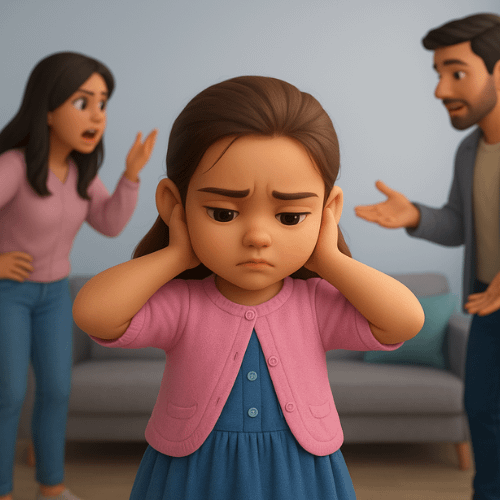
Unlike a single traumatic event such as an accident or natural disaster, developmental trauma is cumulative and relational. It occurs when a child’s fundamental need for safety, stability, and emotional attunement is not consistently met over time.

Common sources include:

  • Emotional neglect or inconsistent caregiving

  • Physical or emotional abuse

  • Chronic household conflict or substance abuse

  • Exposure to unpredictable or frightening behaviour by caregivers

  • Emotionally unavailable parents

  • Growing up in a home where feelings or needs were dismissed or punished

Developmental trauma doesn’t always involve overt abuse; sometimes, it’s the absence of consistent emotional connection that causes harm.


How It Differs from Other Types of Trauma

Not all trauma is the same. While acute or event-based trauma (like a car accident or natural disaster) typically results from a single overwhelming incident, developmental trauma arises from chronic stress that occurs over time during childhood, when the brain and sense of self are still forming.

How Early Experiences Shape the Brain

The human brain develops through a constant interaction between genes and environment. During childhood, the emotional brain (especially the limbic system) learns regulation through safe, attuned relationships.

When caregivers are nurturing and responsive, children learn that emotions can be soothed and relationships are safe. But when caregiving is unpredictable, harsh, or absent, the brain adapts to survive rather than thrive.

Common adaptations include:

  • Hypervigilance: Constantly scanning for danger or disapproval.

  • Emotional numbing: Shutting down feelings to avoid pain or rejection.

  • People-pleasing or perfectionism: Striving to stay “good” to maintain approval and safety.

  • Self-blame: Believing one’s needs or feelings caused the problem.

Over time, these survival strategies can solidify into patterns of thinking and relating that persist into adulthood.
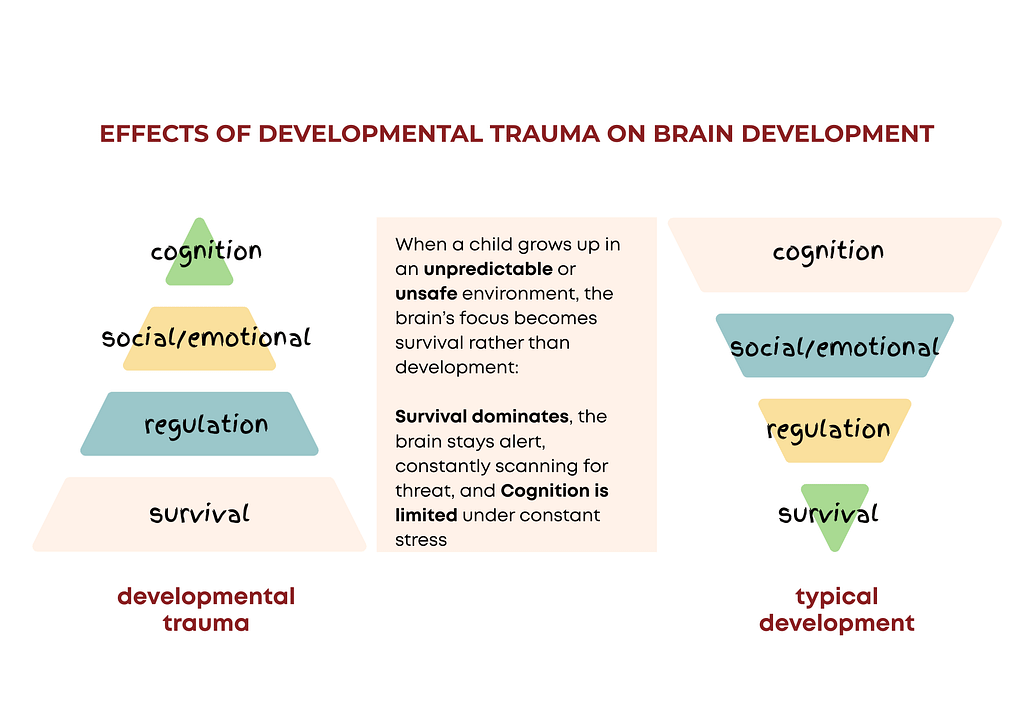

info-graphic showing developmental trauma impact in brain development

When a child repeatedly experiences fear or emotional neglect, their nervous system learns to stay on alert. Over time, this heightened stress response can interfere with brain development — affecting emotional regulation, memory, and even physical health — and shaping how individuals perceive safety, trust, and self-worth throughout life.

Signs and Patterns of Developmental Trauma in Adults

The effects of developmental trauma often persist into adulthood, sometimes subtly. Many adults unknowingly carry its imprint. Because developmental trauma begins so early, its effects are often mistaken for personality traits or “just the way I am.” While many survivors may appear high-functioning, they may struggle internally with feelings of emptiness, shame, or disconnection.

You may notice:

  • Difficulty forming secure relationships

  • Trouble trusting others or relying on support

  • Chronic feelings of abandonment or rejection

  • Emotional detachment or a blurred sense of identity

  • Intense shame, self-criticism, or feeling “not enough”

  • Difficulty identifying or expressing emotions

  • Persistent anxiety, hypervigilance, or emotional numbness

  • People-pleasing or emotional withdrawal to avoid rejection

  • Over-responsibility for others at the expense of your own needs

  • Struggles with boundaries — either too rigid or too porous

Why Old Patterns Repeat: Connecting Early Experiences to Adult Struggles

Old patterns persist because trauma imprints itself on the nervous system.

Certain triggers — a tone of voice, a facial expression, or a dismissive response — can unconsciously reactivate familiar survival states. The brain learned early that staying quiet, busy, or pleasing others helped maintain safety. These reactions feel automatic because they are deeply wired through past conditioning.

Without awareness, we may replay the same dynamics in relationships, careers, and self-perception. Yet these patterns were once protective. They helped us survive an environment where our emotional world wasn’t seen or held with care.

The Body Remembers

Developmental trauma doesn’t only live in memories — it lives in the body and nervous system.

Neuroscientific research shows that repeated activation of the stress response system in early childhood can alter how the brain processes threat, emotion, and attachment. Structures like the amygdala (fear), hippocampus (memory), and prefrontal cortex (regulation) can all be affected.

This is why many adults with developmental trauma experience intense physiological reactions when triggered — panic, dissociation, or shutdown — even when they can’t consciously recall the source

Healing from Developmental Trauma

Recovery from developmental trauma is absolutely possible. Healing involves more than talking about the past — it’s about helping the body and mind learn safety again.

Therapeutic healing often includes:

  • Reconnecting with your body and noticing its signals

  • Developing emotional awareness and self-compassion

  • Learning to regulate the nervous system and tolerate emotions

  • Building safe, trusting relationships — with others and within yourself

  • Integrating parts of the self that once had to hide to stay safe

Healing takes time, gentleness, and consistency. With the right support, the same brain that adapted to survive can also learn to thrive.

How Therapy Can Help

At Gentle Mind, we offer a trauma-informed and compassionate approach that helps you understand your patterns with curiosity — not judgment.

Through approaches like EMDR, Internal Family Systems (IFS), and mind–body–based therapy, you can begin to re-establish a sense of safety, rebuild trust in yourself and others, and learn new ways to respond to life.

If parts of this article resonate with your experience, you might also explore our Trauma Counselling page 

A Final Word

If you resonate with what you’ve read, please know that there is nothing “wrong” with you. Your brain and body adapted to protect you from experiences that were overwhelming at the time. Healing those early wounds takes patience, understanding, and support — but it is possible.

Next on developmental trauma: Recognising the Invisible Wounds and Reclaiming Your Life

In our next article, we’ll explore what these invisible wounds can look like — from emotional neglect and parentification to chronic self-doubt and people-pleasing — and share practical, compassionate steps to begin reclaiming a sense of self, safety, and connection.

Share:

Category

speak to a counsellor

We offer counselling & psychotherapy for emotional well-being and personal growth.

Contact us if you would like to make a counselling appointment or learn more about us and our team.

Sessions are available in-person and online. In-person sessions are conveniently located in Orchard, Singapore.

Book AppointmentLearn more about us

Counselling Services FAQ

Counselling is a very broad term used in conjunction with many types of advice giving. In the context of psychotherapy however, counsellors rarely offer advice, it is the active process of assisting and guiding clients, by a trained professional to understand and resolve personal, social, or psychological problems and difficulties.

Psychotherapy, also called “talk therapy”  aims at gaining insight into mental or emotional health, the resolution of inner conflicts, and to enhance your relationship with yourself and others


The initial session is when your counsellor has the opportunity to find out what brings you to therapy and gather as much useful information as possible.

The counsellor then discusses with the client the various approaches which may be appropriate.

This is also a good opportunity to raise any questions and concerns about the counsellor or process of therapy itself.

It is also nornal to feel anxious or somewhat apprehensive about speaking to a stranger for the first time.

If at any moment, the discomfort you feel is too much for you, do let your counsellor know.

Each individual session takes 60 minutes. When it is necessary, and when possible, extension beyond the 60 minutes session can be discussed with your therapist


Depending on the issue, short-term interventions can help a great deal in a very few sessions in the event of an immediate crisis.

Longer term therapy on an open-ended basis may be need for more deeply entrenched issues.

It is worth noting that it may take a few sessions to build up the rapport and trust necessary for therapy to work.

Effective therapy alleviates symptoms of emotional/psychological disturbances, reduces confusion and empowers a person to make their own effective choices and the decision to act upon them.

People enter counselling for various reasons, to regain psychological wellness, to address unresolved feelings, for personal development, to improve relationships, or to make sense of any emotions they may be experiencing.

The therapeutic relationship between a psychotherapist/counsellor and a client is strictly professional.

The therapeutic relationship differs from all other relationships you have.

You can tell your therapist things without having to worry about your information being told to others or in any way affecting your job, family or relationships. You can be honest with your therapist without having to worry about offending friends or family.

When a therapist asks how you are doing, he or she really wants to know.

It is very important to work with a counsellor/therapist that you are comfortable with and feel you can trust in order to form a good therapeutic relationship.

The level of trust and empathy between you and your counsellor is crucial to the success of therapy.

We adhere fully to the requirements of the Data Protection Act and the ethical framework set out by the SAC (Singapore Association of Counsellors) and APAC (Association for Psychotherapist and Counsellors).

All information disclose during therapy is private and confidential except in extenuating circumstances where there is risk of serious harm to you or others.

In the event of a life-threatening medical situation, call 995 or go to the nearest A&E.

crisis Helplines

if you or anyone you know are in need of immediate help

Samaritans of SingaporeInstitute of Mental Health